
Can Neural Networks Reason? A ✂️ Trip Back to Optimistic Yann LeCun
February 14, 2025
✂️ Can neural networks reason?
Five years ago, the timeline was full of people saying the quiet part out loud: neural networks are about to reason like humans.
Not “be useful.” Not “summarize my email.” Reason. Like you, but without needing coffee.
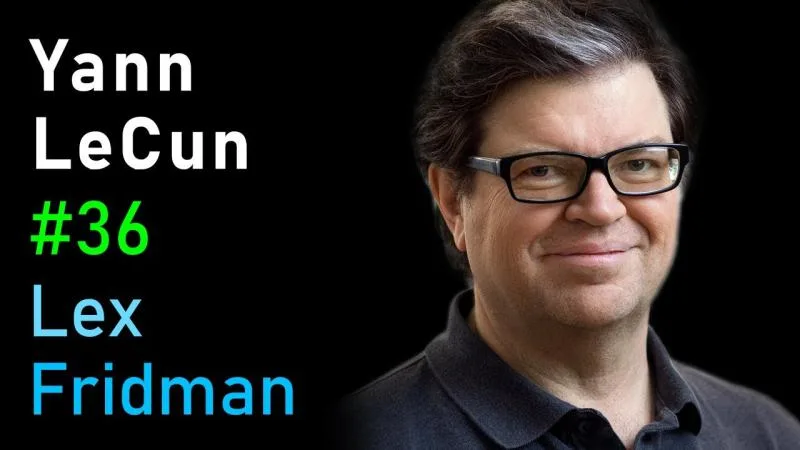
I was scrolling with that mix of curiosity and side-eye when I found Yann LeCun on the Lex Fridman podcast, calmly explaining how we could get there. I did what any healthy internet citizen does: I made a clip, posted it on LinkedIn, and added scissors emoji energy.
Watch the clip
Open on YouTube if the embed does not load.
Why this clip aged like milk—and like wine
Like milk because the word reason got stretched thinner than blockchain whitepapers. Every product deck suddenly had a “reasoning layer.” Every demo was chain-of-thought cosplay.
Like wine because the question is still dead serious. What would it mean for a system to reason—not just pattern-match convincingly, but navigate meaning, goals, and contradiction?
LeCun was arguing from a research worldview: architectures, objectives, world models—not “type harder prompts until the benchmark smiles.” That part aged better than the hype cycle.
My unofficial scorecard (five years later)
| Claim era (≈2020) | 2025 reality check |
|---|---|
| “Networks will reason like humans” | They sound like they reason on good days |
| One killer architecture incoming | Zoo of models, routers, agents, and regret |
| More data fixes most things | More data fixes many things, creates new failures |
| Skeptics are just behind | Skeptics are sometimes early |
I am not dunking on LeCun. He was doing what good researchers do: sketch the frontier. The internet did what the internet does: turn a frontier into a LinkedIn prophecy.
What I actually believe now
LLMs are extraordinary simulators of language. They can chain steps, use tools, and surprise you in ways that look like reasoning—especially when the task is well represented in training data.
That is not the same as:
- Owning a world model that updates when reality changes
- Caring whether an answer is true
- Surviving adversarial nonsense without confident hallucination
If you want the philosophical version of this skepticism in Spanish, I later wrote Tesis sobre la amplificación, la inteligencia y el error contemporáneo—same family of doubts, different outfit.
The ✂️ moral of the story
Keep the clips. Time stamps are how you win arguments with your past self.
When someone says “AGI next quarter,” pull up what next quarter meant five years ago. Compare. Laugh a little. Then go build something small, testable, and honest about what it can and cannot do.
Can neural networks reason? Maybe, in slices, on tasks we baked into the loss function. Like humans? We are still not there—and pretending we are is how you ship bugs with confidence scores.
Published originally on LinkedIn.